11-08-2008, 08:56 AM
|
#21 (permalink)
|
|
EcoModding Apprentice
Join Date: Jan 2008
Location: Chicagoland
Posts: 204
- - '10 Toyota Prius III w/Navi
Thanks: 4
Thanked 12 Times in 12 Posts
|
Hi FX...,
I am not sure using the whale tubercles on a canard aircraft is a good idea. The idea of the canard aircraft is that the canard is designed so that it stalls before the main wing, as speed decreases. This way the angle of attack of the main wing never increase into the stall regime.
So, if you put tubercles on the canard wing, it does not stall. And the angle of attack of the main wing can be reached where it does stall, and the aircraft falls out of the sky.
Maybe you could put turbercles on the main wing, and then thin up the section of the canard. All would have to be tested very carefully.
|
|
|

|
 Today Today
|
|
|
|
 Other popular topics in this forum...
|
|
|
|
|
11-15-2008, 03:18 PM
|
#22 (permalink)
|
|
Master EcoModder
Join Date: Jan 2008
Location: Sanger,Texas,U.S.A.
Posts: 15,895
Thanks: 23,972
Thanked 7,222 Times in 4,649 Posts
|
fluke
Quote:
Originally Posted by aerohead

Fun read! Guess we'll all see if it goes in the marketplace.Ease of manufacture may be an issue.Thats some very sophisticated architecture. Pressure and velocity distribution could affect dynamic balance,and resonance ( flutter ) may affect structural integrity with high velocity applications, as there are so many local areas of impact,channeling,redistribution and discontinuities of aft-trailing -edge flow .Super-turbulence!Whales can articulate their flippers while turning,changing angle of attack at will as they pirouette in the water.The fluke of the whale is responsible for propulsion.I'd be more impressed if the tubercles were present in the fluke where the real power is laid down .Since whales communicate at extremely low frequency,could it be that the tubercles are "heard" by other would-be mating-age male whales and fertile in-season females,as tail-feathers are "seen" on the male peacock? Yep,I'm losing it alright!
|
Well-well! I saw a Pacific Life Insurance Co. tv "ad" on PBS television,showing their mascot whale breaching.The fluke was clearly visible in the video footage,and the flukes trailing edge was festooned with the tubercules.-------------- Also,in a PBS Boeing "ad",their new jetliner is shown with the new GE turbofan engines which use the serrated trailing edge.---------------- It's been explained that the jet is using it for acoustic attenuation.Perhaps do to the nature of a whale's low-frequency long-distance undersea communications,the tubercules reduce local dynamic "noise",aiding their ability to distinguish songs over background chatter.Don't know!---------------- As an aside,I've noticed old-time wood fireplace chimney caps with serrated edges under the rain cap.My thought was that perhaps the serrations might help to entrain errant cinders within the rising heat plume,allowing time for the embers to self-extinguish before settling onto combustible materials below.Don't know.
__________________
Photobucket album: http://s1271.photobucket.com/albums/jj622/aerohead2/
|
|
|
|
|
02-23-2009, 07:25 PM
|
#23 (permalink)
|
|
Master EcoModder
Join Date: Jan 2008
Location: Sanger,Texas,U.S.A.
Posts: 15,895
Thanks: 23,972
Thanked 7,222 Times in 4,649 Posts
|
Finally found NASA paper on "tubercles"
After many months,I located the NASA paper I believed would shed some light on the whale tubercles.The paper is entitled "Investigation of Acoustic Effects of Leading-Edge Serrations on Airfoils," by Alan S.Hersh,Paul T.Soderman,and Richard E.Hayden.The paper appeared in JOURNAL OF AIRCRAFT,Vol.11,No.4,April,1974,pp.197-202,Copyright,1974.
The report is pretty technical.15 references are listed,going back to 1928.The research stems from observations of the aero-acoustic behavior of the owl wing,with it's leading-edge "comb",downy wingtop,and serrated trailing edge.
The research was conducted at NASA's low noise BBN acoustic windtunnel.
The crux of the research is that the "tubercles" eliminate "tones" created by periodic vortex shedding, by blasting the flow into turbulent flow and random wake turbulence.
Early roughening of wings produced increased drag,but Soderman was able to tune the serrations so as not to aggravate lift or drag while elliminating noise.
The test data is basically about frequency and sound pressure level.Of note,is the fact that above 10-degrees angle of attack,the comb makes no difference,as the wing is stalled at that point,and turbulence is random and without "tones".
Since "hearing" is so important to both whales and owls,the adaptations appear to be less about aerodynamic or hydrodynamic efficiency,and more about feeding efficiency.
The paper is a good read and I thank Paul for sending me a copy.
P.S. I believe PBS Television has free Pod-Casts of it's programs available at PBS.ORG. If you haven't seen "Raptor Force" on NOVA,you're missing out!
|
|
|
|
|
The Following User Says Thank You to aerohead For This Useful Post:
|
|
|
02-25-2009, 02:52 AM
|
#24 (permalink)
|
|
Master EcoModder
Join Date: Mar 2008
Location: USA
Posts: 568
Thanks: 1
Thanked 73 Times in 58 Posts
|
Notice that the whale tubercles are on the leading edges, with the trailing edge smooth. Nature had plenty of time to refine the tubercles, and chose the leading edge.
That said, the barred owl has serrated edges on its feathers, for silent flight. These are not as efficient for speed, but worth the sacrifice for stealth, especially at night.
|
|
|
|
|
06-13-2017, 08:37 AM
|
#25 (permalink)
|
|
Master EcoModder
Join Date: Jul 2011
Location: Ann Arbor, Michigan
Posts: 4,158
Thanks: 120
Thanked 2,790 Times in 1,959 Posts
|
Bumping this old thread, can we call this trickle down technology or just marketing?
https://www.ruppams.com/CatalogConte...VLS/HVLSRA.asp

Quote:
Tubercle Advantage
Offering stall angles as high as 22*degrees
Reduces number of fan blades needed versus conventional*airfoils
Noise reduction by eliminating tip*stalling
Lowers vibration and leads to less wear and tear on the blades and drive*train
|
|
|
|
|
|
The Following 3 Users Say Thank You to kach22i For This Useful Post:
|
|
|
06-13-2017, 10:22 AM
|
#26 (permalink)
|
|
Master EcoModder
Join Date: Sep 2012
Location: Victoria, BC
Posts: 1,747
Thanks: 75
Thanked 576 Times in 426 Posts
|
Looks like it can also cut bread for ya.
|
|
|
|
|
06-13-2017, 01:26 PM
|
#27 (permalink)
|
|
Old Retired R&D Dude
Join Date: May 2008
Location: Woburn Mass USA
Posts: 702
Thanks: 10
Thanked 18 Times in 17 Posts
|
I saw an RC model with Vortex generators, does that count?
Opterra 2m Wing BNF Basic with AS3X
__________________
Cheers,
Rich
Current ride: 2014 RAV4 LE AWD (24 MPG)
Wife's Pizza Transporter

|
|
|
|
|
06-13-2017, 04:06 PM
|
#28 (permalink)
|
|
Master EcoModder
Join Date: Aug 2012
Location: northwest of normal
Posts: 27,695
Thanks: 7,775
Thanked 8,584 Times in 7,068 Posts
|
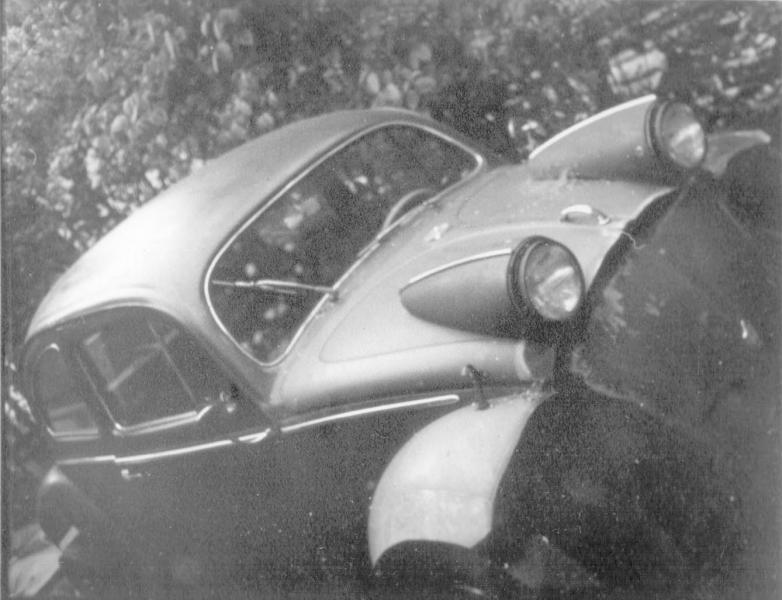
I put 1940 Buick tubercles on my rat bug in the late 70's.
 |
|
|
|
|
06-13-2017, 09:36 PM
|
#29 (permalink)
|
|
Primer is still paint!
Join Date: Aug 2015
Location: box by the river
Posts: 558
Thanks: 96
Thanked 124 Times in 98 Posts
|
Quote:
Originally Posted by kach22i
Bumping this old thread, can we call this trickle down technology or just marketing?
|
I want to go all sci-fi movie and cut zombie heads off with that fan! 
|
|
|
|
|
06-13-2017, 11:27 PM
|
#30 (permalink)
|
|
EcoModding Lurker
Join Date: Jun 2017
Location: Northeast Arkansas
Posts: 73
Thanks: 45
Thanked 12 Times in 8 Posts
|
WTF?!?!
Stands for "whale trailing fins". 
|
|
|
|
|